

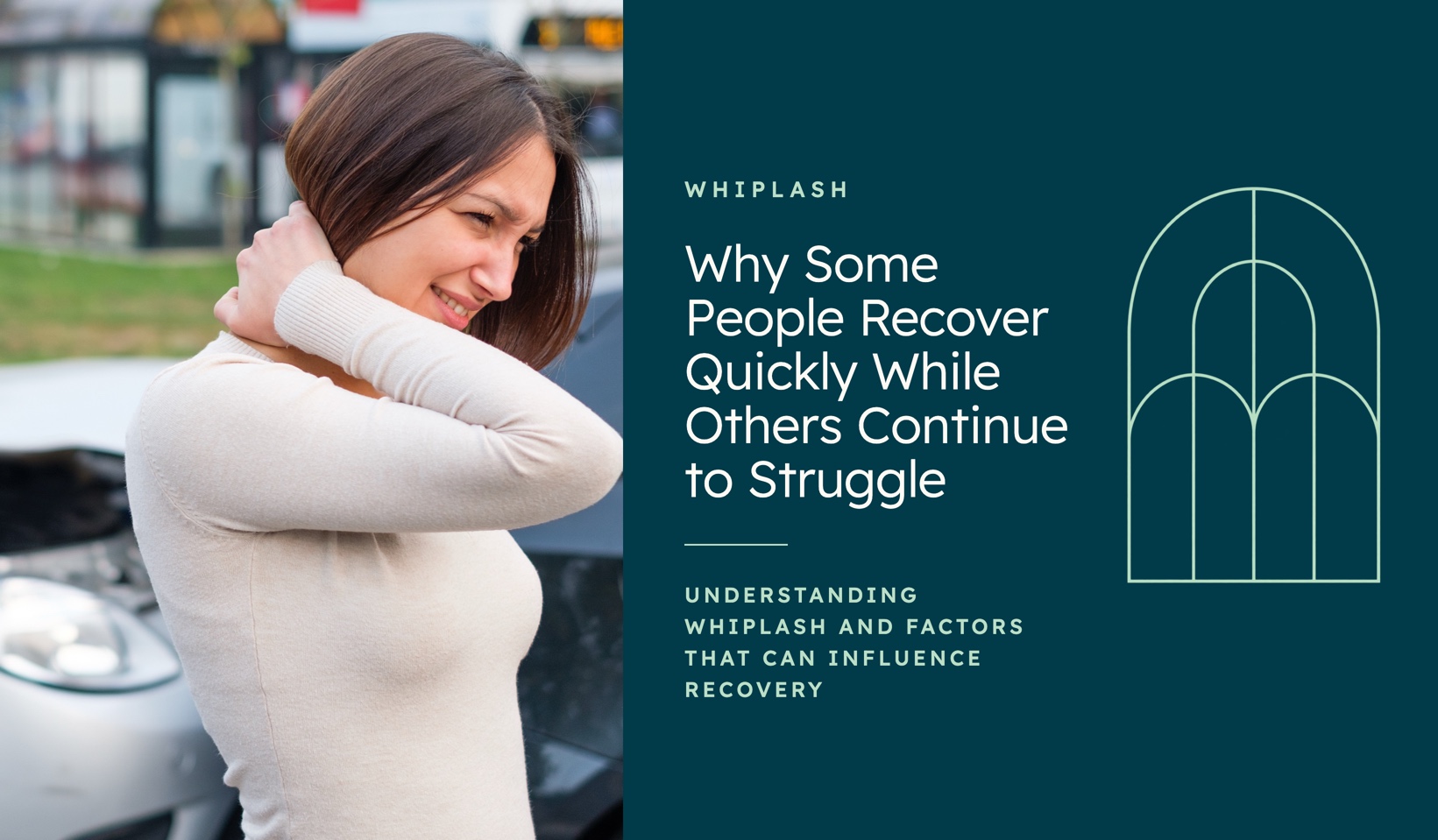
Whiplash is one of the most common injuries following a car accident, but it can also occur after a fall, a sporting injury or any event where the head is suddenly thrown forwards and backwards.
For many people, the pain settles within a few weeks. For others, the symptoms linger for months or even years, despite scans appearing normal and no obvious tissue damage remaining.
If you’ve ever wondered, “Why am I still in pain when the injury happened so long ago?”, you’re certainly not alone.
Whiplash affects everyone differently.
Some people notice pain immediately after the injury, while others don’t develop symptoms until several hours or even days later.
Common symptoms include:
For some people, turning the head becomes uncomfortable. Others simply feel like their neck has never quite returned to normal.
When your head is suddenly thrown forwards and backwards, your brain has only fractions of a second to react.
Long before you consciously feel pain, your nervous system predicts that the neck may be at risk of injury. Rather than waiting to see what happens, it immediately activates a protective response.
The small muscles surrounding the joints tighten, larger muscles throughout the neck and shoulders contract, and movement is reduced. This reflex is designed to stabilise the spine and protect vulnerable structures from further injury. At the same time, inflammatory chemicals are released to begin the healing process, making the injured tissues more sensitive to movement and pressure.
This protective response is incredibly important; it helps prevent further damage while your body heals.
For most people, as the tissues recover over the following days and weeks, the nervous system gradually reduces this protective response. The muscles relax, the joints begin moving normally again, and everyday activities become comfortable once more.
Sometimes the protective response doesn’t switch off as expected.
Even after the injured tissues have healed, the nervous system may continue behaving as though the neck still needs protecting. The muscles remain tight, the joints don’t move as freely, and the brain continues to limit movement because it predicts that moving the neck may still be unsafe.
This doesn’t mean the pain is “all in your head.” It means your nervous system is still doing exactly what it was designed to do, it has simply become overprotective.
When this protective cycle continues, the body can become trapped in a pattern of muscle guarding, joint stiffness and reduced movement. The original injury may have healed, but the nervous system hasn’t yet regained confidence that it is safe to move normally again.
One of the goals of chiropractic care following whiplash is to help interrupt this protective cycle.
When appropriate, gentle chiropractic adjustments aim to restore normal movement to joints that have become stiff following the injury. Improving movement also changes information travelling from the joints and surrounding muscles back to the brain.
The brain constantly uses this information to decide how much protection the neck needs. As movement becomes more normal and confidence in the neck gradually returns, many people notice that the muscles begin to relax, movement becomes easier and everyday activities feel less threatening.
Gentle and precise chiropractic adjustments aim to restore normal joint movement and reduce unnecessary muscle guarding. For many people, this helps them regain confidence in their movement, reduce pain and return to everyday activities.
If you’ve experienced a whiplash injury and your neck still doesn’t feel like it has fully recovered, it may be because the body’s protective response hasn’t completely settled.
At The Third Space in Amsterdam-Oost, we take the time to understand your symptoms, identify the factors contributing to your pain and develop an individualised treatment plan to help you move more comfortably again.
Because sometimes recovery isn’t about healing damaged tissue—it’s about helping the body realise that it is safe to move again.