

Being told you have a disc herniation or a slipped disc can sound alarming. Fortunately, most disc herniations improve over time, and many people recover without needing surgery.
At The Third Space, we regularly assess and treat people with disc-related back and neck pain, helping them move more comfortably while supporting their recovery.
Between each bone of your spine sits an intervertebral disc. These discs act like shock absorbers, allowing your spine to move while helping distribute forces during everyday activities.
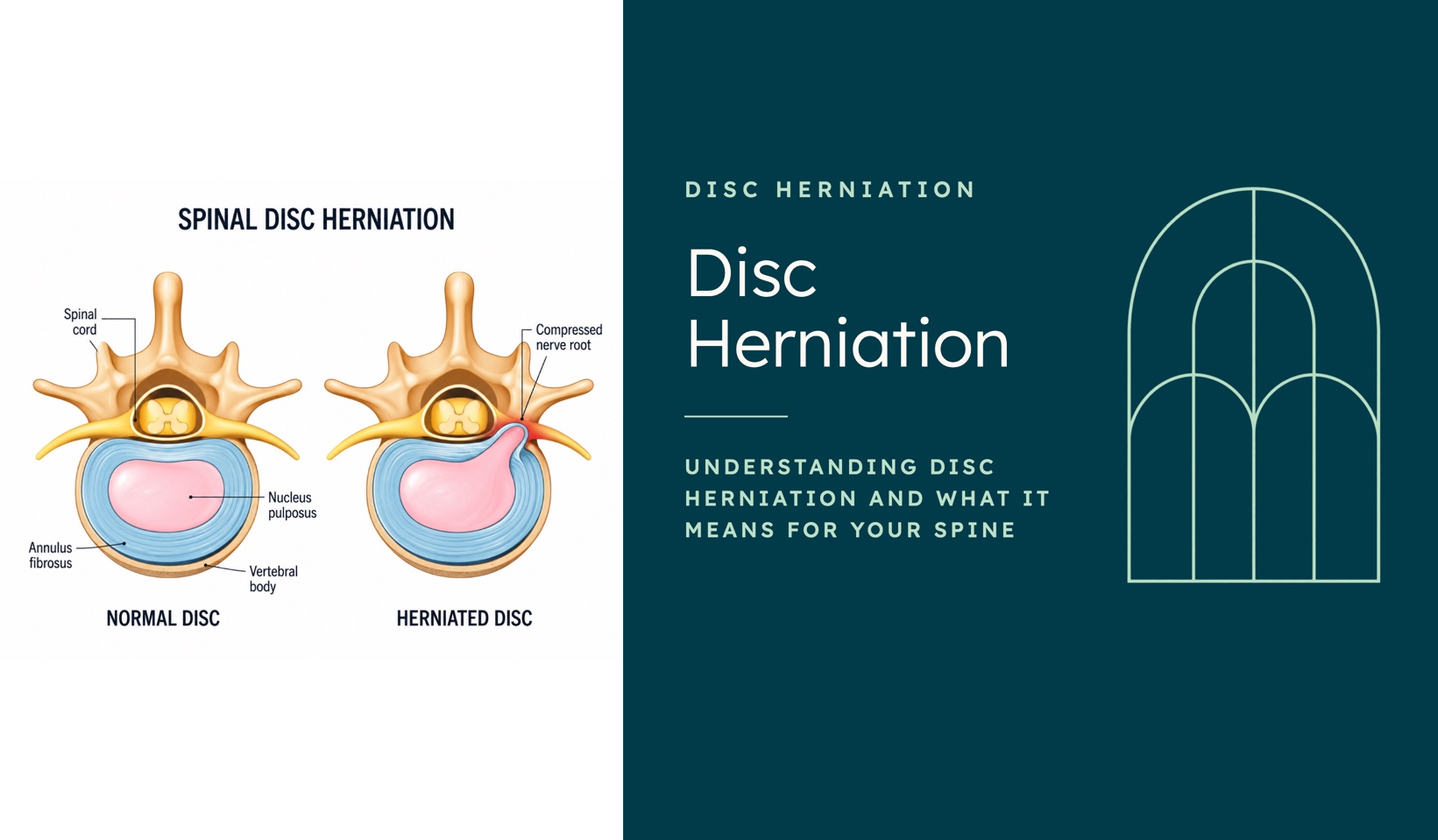
A disc has a tough outer layer and a softer, gel-like centre. A disc herniation occurs when part of this inner material pushes through the outer layer. If the herniation irritates a nearby nerve, it can cause pain that travels into the arm or leg.
Many people are surprised to learn that disc herniations are actually quite common, even in people who have no pain at all.
Depending on where the disc is located, symptoms may include:
Not every disc herniation causes symptoms, and not every episode of back pain is caused by a disc.
One of the most reassuring things about disc herniations is that they often improve naturally.
Over time, the body can gradually break down and reabsorb part of the herniated disc material while inflammation settles. As the irritation around the nerve reduces, many people notice their pain gradually improving over weeks or months.
Remaining as active as your symptoms allow is usually encouraged, as prolonged bed rest is now known to slow recovery for many people.
A disc herniation often causes the surrounding muscles to tighten in an attempt to protect the painful area. This protective muscle guarding can make the back feel even stiffer and more uncomfortable.
At The Third Space, we perform a thorough assessment to determine whether your symptoms are consistent with a disc herniation and to rule out other possible causes of your pain.
Treatment is always tailored to your symptoms. Gentle chiropractic care aims to improve movement in the joints surrounding the affected area, reduce unnecessary muscle guarding and help you return to normal movement as comfortably as possible. We also provide advice on activity, posture and exercises to support your recovery.
Although most disc herniations improve without surgery, some symptoms require immediate medical assessment.
Seek urgent medical care if you develop:
These symptoms are uncommon but require prompt medical evaluation.
Whether you’ve recently been diagnosed with a disc herniation or you’re experiencing back pain with pain travelling into your arm or leg, we’re here to help.
At The Third Space in Amsterdam-Oost, we provide evidence-informed chiropractic care designed to reduce pain, improve movement and help you return to everyday life with confidence.