

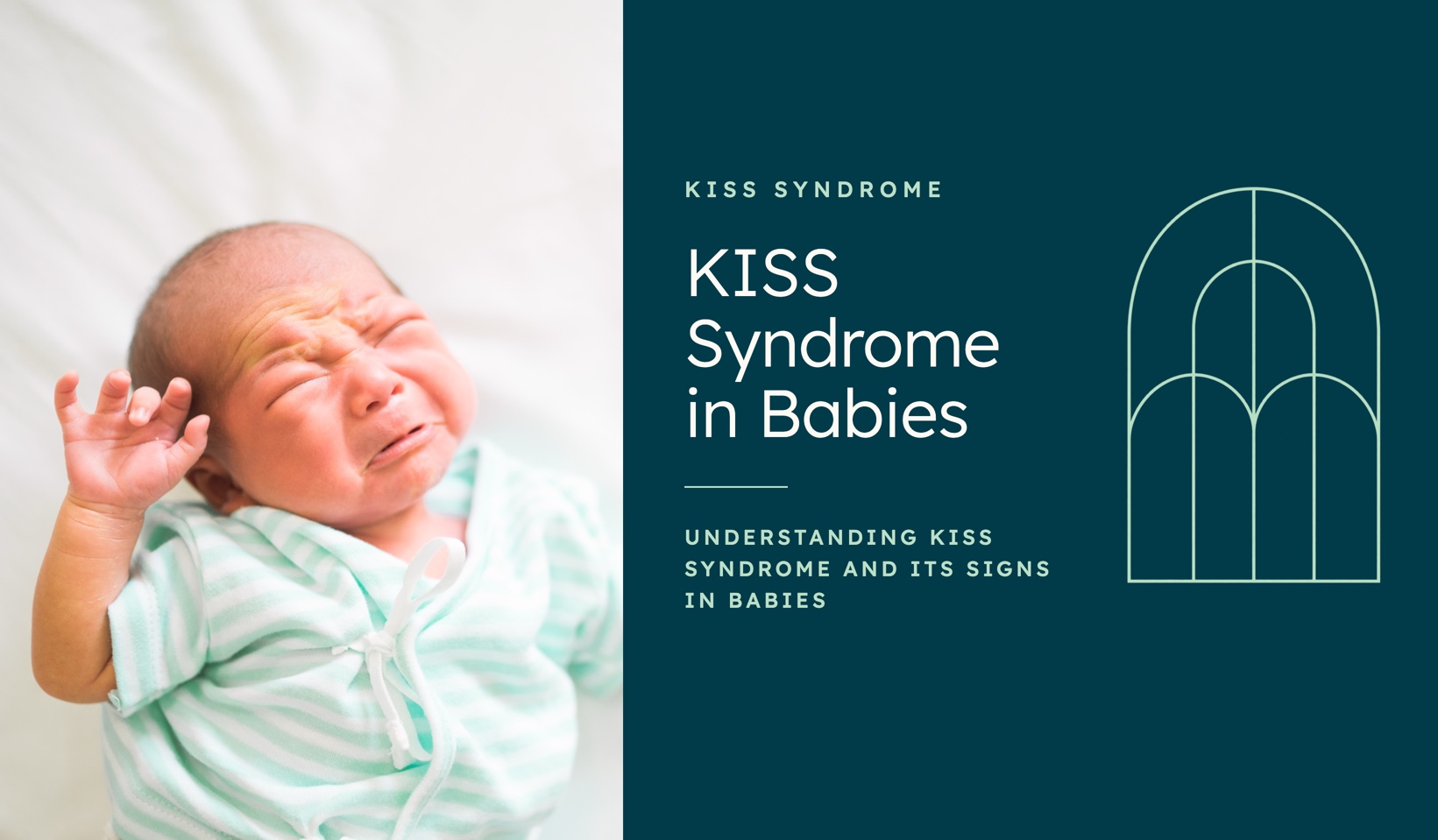
If you’ve recently become a parent, you may have come across the term KISS syndrome while searching online for answers about your baby’s symptoms.
It is a term commonly used by some healthcare professionals to describe a group of symptoms that can occur during the first months of life, particularly when a baby has difficulty moving their head and neck comfortably.
At The Third Space, we often see parents who have questions about KISS syndrome and want to better understand what it means.
KISS stands for Kinematic Imbalance due to Suboccipital Strain.
The term refers to the idea that some babies develop reduced movement or increased tension around the upper neck following birth. Because the upper cervical spine plays an important role in head movement, posture and early motor development, restrictions in this area may contribute to a range of symptoms that often occur together.
Babies described as having KISS syndrome may experience one or more of the following:
Not every baby will experience all of these symptoms, and the presentation can vary considerably from one child to another.
Birth is one of the first major physical events a baby experiences.
During labour and delivery, the baby’s head, neck and shoulders are exposed to significant pressure and rotation as they pass through the birth canal. In some situations, these forces may be greater, such as during a prolonged labour, a very rapid birth, an assisted delivery using forceps or vacuum, or when the baby has been in a less favourable position before birth.
Most babies adapt remarkably well to these forces. However, some may develop increased muscle tension or reduced movement around the neck or upper spine during the early weeks of life.
If turning the head one way feels easier than the other, babies naturally begin favouring that position. Over time, this may influence how they feed, how they lie in their cot, how they tolerate tummy time and, in some cases, the shape of their head.
There is no single test for KISS syndrome.
Instead, a healthcare professional will usually take a detailed history of the pregnancy, labour and birth before assessing how your baby moves. Particular attention is often paid to neck movement, muscle tension, head preference, posture and general symmetry.
The aim is to build a complete picture of your baby’s movement and identify whether any restrictions or asymmetries are present.
At The Third Space, our baby assessments are gentle, thorough and specifically designed for newborns and infants.
We carefully examine how your baby’s neck, jaw and spine are moving and assess for any areas of increased tension or reduced mobility. If appropriate, gentle chiropractic techniques may be used to encourage more comfortable movement. The forces used are extremely light and specifically adapted for babies.
Whether you’ve been told your baby may have KISS syndrome or you’ve simply noticed a preferred head position or feeding difficulties, an assessment can help provide a better understanding of how your baby is moving and whether there are areas that may benefit from gentle care.
If you have concerns about your baby’s movement or have questions about KISS syndrome, we’d be happy to help.
At The Third Space in Amsterdam-Oost, we provide gentle chiropractic assessments for babies, taking the time to understand your concerns and explain our findings clearly. Our goal is to support your baby’s comfort, movement and development during the important first months of life.