

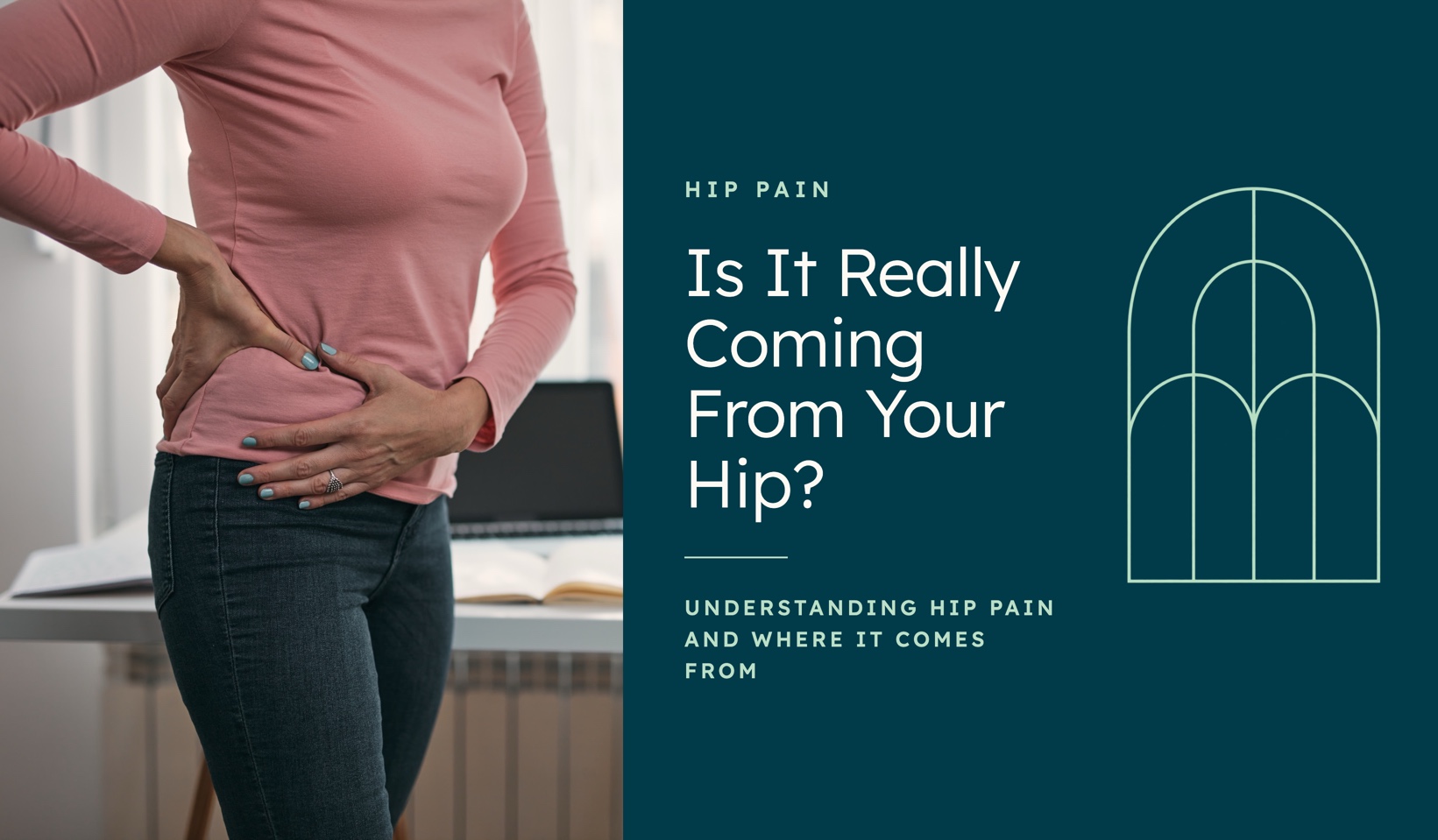
Hip pain can make everyday activities surprisingly difficult. Walking the dog, climbing stairs, going for a run or simply getting out of the car can suddenly become painful, leaving many people wondering exactly what is causing their symptoms.
One of the most common things we hear in practice is, “My hip hurts.” Interestingly, many people who say this aren’t actually pointing to the hip joint at all. Instead, they’re pointing to the back of the pelvis, where the sacroiliac joint (SIJ) is located.
Understanding exactly where your pain is coming from is one of the most important steps towards finding the right chiropractic treatment.
Hip pain can present in many different ways depending on the structures involved.
Some people experience a deep ache in the groin, while others notice pain on the outside of the hip, in the buttock, or around the lower back.
Common symptoms include:
Although these symptoms may seem similar, they can have very different underlying causes.
One of the biggest misconceptions surrounding hip pain is that it always originates from the hip joint itself.
In reality, many people who point to the back of their “hip” are actually describing pain around the sacroiliac joint (SIJ), where the pelvis meets the base of the spine.
The SIJ, lower back, and hip work closely together every time you walk, bend or stand on one leg. When one area isn’t functioning as well as it should, another often has to compensate. This is why pain felt around the hip isn’t always coming from the hip itself.
Before deciding how to treat your symptoms, it’s important to establish exactly which structures are involved.
Pain felt deep in the front of the hip or groin is more likely to involve the hip joint itself.
However, that doesn’t necessarily mean the hip is the only problem.
One area we pay particular attention to is where the lowest lumbar vertebra (L5) meets the sacrum. This region acts as the bridge between the spine and the pelvis, helping to transfer forces through the body every time you walk, run or lift. It also plays an important role in how the gluteal muscles and pelvis function together.
If movement around the lower back, sacrum or pelvis becomes restricted, the hip may gradually be asked to do more work than it was designed for.
Over months or years, this increased load can contribute to irritation of the hip joint and surrounding muscles and may even place additional stress on the knee. Many people notice that these symptoms are worse after prolonged sitting, walking long distances or running.
The lower back is also home to the nerves that supply the hip and leg. These nerves carry information involved in muscle function, sensation and pain. When the joints of the lumbar spine become irritated or don’t move well, they can sometimes contribute to pain that is felt in the hip, buttock or upper leg, even when the hip joint itself isn’t the primary source of the problem.
This is why we don’t simply examine the hip in isolation. Looking at how the lower back, pelvis and hip work together often provides a much clearer picture of why symptoms have developed.
As we age, it is completely normal for the hip joint to undergo gradual wear and tear.
Many people are told they have arthritis or degenerative changes and understandably worry that nothing can be done. However, degenerative changes seen on an X-ray or MRI don’t always explain how much pain someone experiences. Many people have significant arthritis with very little discomfort, while others have relatively mild changes but experience considerable pain.
Although we cannot reverse degeneration that has already occurred, we can often improve how the joints, muscles and surrounding tissues function. By improving movement through the lower back, pelvis and hips, many people experience less discomfort, improved mobility and find walking and everyday activities much easier again.
Our goal isn’t to change what your scan looks like; it’s to help you move better and reduce the number of painful days you experience.
If hip pain is affecting your ability to exercise, work or enjoy everyday life, it may be worth looking beyond the hip joint itself.
At The Third Space in Amsterdam-Oost, we take the time to understand your symptoms, perform a thorough examination and identify the factors that may be contributing to your pain.
Because sometimes the most important step isn’t simply treating the painful area; it’s understanding why it became painful in the first place.